
New global position commits the ICLEI network to supporting a rapid, just, and globally coordinated transition away from fossil fuels at the subnational level, guided by five principles for a fossil fuel-free future: fair, fortified, fast, flourishing, and flexible.
As governments work to translate landmark commitments to transition away from fossil fuels into tangible action, such as the COP30 Presidency Roadmap, as well as the Transitioning Away from Fossil Fuels conferences, ICLEI – Local Governments for Sustainability has adopted a Global Position on Transitioning Away from Fossil Fuels: A Local and Regional Government Perspective on the Energy Transition, with its global network of more than 2,500 local and regional governments committing to accelerating a fair, resilient and locally led energy transition.
Approved by ICLEI’s Global Executive Committee, the organization’s highest decision-making body, in June 2026, the Global Position establishes the organization’s shared framework to support a rapid, just, and globally coordinated transition away from fossil fuels at the subnational level. The commitment is guided by five principles – to be fair, fortified, fast, flourishing and flexible- and is backed by concrete commitments to support local and regional governments with technical assistance, peer learning, multilevel governance and international cooperation.
The Position comes at a defining moment for climate and sustainable energy action. Fossil fuels are responsible for 74.5 percent of global greenhouse gas emissions, and limiting global temperature increase to “well below 2°C”, as set out in the Paris Agreement, requires reaching net-zero emissions by mid-century, a fundamental transformation of global energy systems.
Yet, the global commitment to this transition has seen inconsistent progress – it was reaffirmed at UNFCCC COP28, then sidestepped at COP30. In the run-up to the milestone year of 2030, efforts to reignite the transition are unfolding in a context shaped not only by the climate emergency, but by geopolitical instability, disrupted trade routes, supply chain fragility, and increasing energy security risks that heighten the need for the transition.
For ICLEI, transitioning away from fossil fuels is about far more than reducing greenhouse gas emissions. It is about ensuring the transition itself is fair, minimizes social and economic harm, and delivers lasting benefits through the sustainable integration of renewable energy, stronger energy security, improved public health, more resilient local economies, and communities that are better prepared for an increasingly uncertain future.
Against this backdrop, the Position provides a common direction for ICLEI’s global network while calling for stronger multilevel governance, greater investment and closer collaboration across all levels of government, aligned with the Paris Agreement, Nationally Determined Contributions (NDCs), the Sustainable Development Goals (SDGs), and long-term net-zero and energy resilience objectives.
Where the energy transition becomes reality
The transition away from fossil fuels will ultimately be judged not by what governments negotiate, but by what gets implemented in cities, towns and regions around the world.
While national governments determine energy policy, local and regional governments shape how energy is consumed every day. Through decisions on buildings, transport, land-use planning, public procurement, municipal services, waste management and local economic development, they influence energy demand, accelerate renewable energy deployment, improve energy efficiency and electrification, strengthen resilience and work directly with businesses, workers and communities to ensure the transition is practical, inclusive and economically viable.
Rohit Sen, Head of Sustainable Energy at ICLEI, said: “The transition away from fossil fuels will not succeed through international agreements alone – it will succeed where energy decisions are implemented every day, in cities, towns and regions. For the ICLEI network, moving away from fossil fuels is not only about reducing emissions, but also about strengthening energy security, improving public health, building resilient local economies and supporting communities through the transition. We now have a shared framework that connects local ambition with practical solutions, peer learning and international cooperation to accelerate progress worldwide.”
A shared framework for a just transition
Recognizing that no two communities face the same circumstances, the Position is built around five guiding principles that define ICLEI’s approach to the energy transition.
The transition must be fair, ensuring that no one is left behind and that workers and communities are supported throughout the process. It must be fortified, strengthening resilient and decentralized renewable energy systems. It must be fast, avoiding long-term fossil fuel lock-in through accelerated renewable energy deployment, electrification and energy efficiency. It must be flourishing, safeguarding biodiversity and ecosystem integrity while delivering benefits for climate, nature and human well-being. And it must remain flexible, recognizing differing local contexts, capacities and development pathways while promoting locally adapted, data-driven solutions.
Datuk Sapiah binti Haron, Mayor of Hang Tuah Jaya Municipal Council, Malaysia, and ICLEI Global Executive Committee Sustainable Energy Portfolio Holder, said: “A fair and flexible energy transition puts energy access and affordability first, not last. It recognizes that cities play important roles and that transition also must improve people’s lives while advancing climate action and creating inclusive economic opportunities. ICLEI’s role is to connect cities at every stage, turning lived experience into shared knowledge so no city is left behind.”
Building on the momentum of Santa Marta
The Position builds on growing international efforts to translate global commitments into practical action.
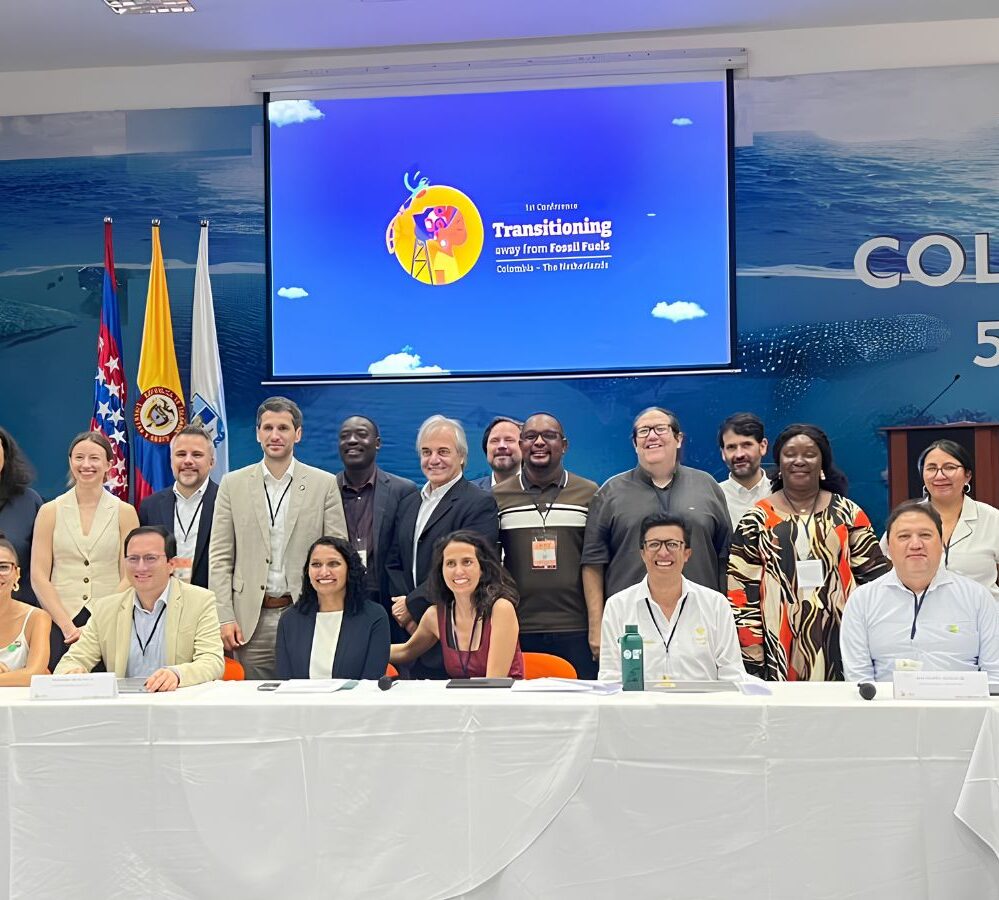
At the First Conference on Transitioning Away from Fossil Fuels, held in Santa Marta, Colombia, in April 2026, and co-hosted by the governments of Colombia and the Netherlands, representatives from 57 countries came together to explore practical pathways for implementing the commitment first adopted at COP28 and carried forward by the COP30 Presidency. Rather than replacing negotiations under the UNFCCC, the conference created a platform for governments and partners willing to accelerate implementation and exchange practical experience.
ICLEI, together with C40 Cities, the Under2 Coalition, the Fossil Fuel Non-Proliferation Treaty Initiative, and Colombia’s Ministry of Environment and Sustainable Development, led the conference’s Chapter on Subnational Governments, ensuring that cities, regions and territories were recognized as indispensable partners in delivering the transition on the ground.
The Global Position transforms that momentum into a long-term institutional commitment for ICLEI’s global network.
Backing the governments delivering the transition
Through the Position, ICLEI commits to supporting local and regional governments of all contexts, sizes, and capacities while calling for globally coordinated action in developing locally adapted strategies for transitioning away from fossil fuels while addressing resilience, justice and energy poverty. This includes helping cities and regions access finance and partnerships, and deploy renewable energy, electrification, energy efficiency and other locally appropriate solutions.
This work aligns with existing ICLEI initiatives including 100% Renewables Cities and Regions, Climate Neutrality Framework and GreenClimateCities Program.
Lindsey P. Horvath, Supervisor of Los Angeles County and North America representative on the ICLEI Global Executive Committee, said: “On behalf of the ten million people who call it home, Los Angeles County is taking bold action to transition away from fossil fuels. Our region is proving that communities of every size can lead this transformation—from the nation’s largest urban oil field to a future powered by 100% clean electricity, and from smog-choked freeways to record-setting electric vehicle adoption. As climate-fueled disasters become more frequent and more devastating, our residents expect us to lead with urgency and ambition.”
Supervisor Horvath added: “I applaud ICLEI’s global commitment to transition away from fossil fuels and urge local leaders around the world to turn that commitment into action.”
The road ahead
As the international community prepares for UNFCCC COP31, ICLEI will continue working with local and regional governments, national governments and international partners to translate commitments on transitioning away from fossil fuels into investment, implementation and measurable progress on the ground.
A forthcoming discussion paper will provide practical guidance to help cities and regions operationalize sustainable energy transitions, complementing ICLEI’s existing portfolio of technical assistance, peer learning and capacity-building initiatives.
Through its role as the focal point organization for the Local Governments and Municipal Authorities (LGMA) Constituency, and its global network of members and partners, ICLEI will continue to advocate for stronger multilevel governance, helping shape the policies, partnerships and investment needed to accelerate a just, equitable and locally led energy transition.
Other international processes, including the second Conference on Transitioning Away from Fossil Fuels, to be co-hosted by the governments of Ireland and Tuvalu in 2027, will also sustain this momentum.
Alongside these efforts, ICLEI will continue to contribute to the COP30 Presidency Roadmap for Transitioning Away from Fossil Fuels and related global initiatives, ensuring that the perspectives and experience of local and regional governments remain central to the global conversation.
The full Position and its accompanying Annex, with governance context, sectoral considerations, and supporting references, are available here.

 News
News