
A new study has found that Europe needs to invest about €70 billion per year until 2050 in climate adaptation to fully protect lives and livelihoods and improve resilience against climate hazards.
At the same time, ninety percent of climate change adaptation measures in Europe are led at the local and regional level, according to the European Committee of the Regions.
How can we connect future investments to ensure that these cities and regions have the capacity to adapt at the scale needed?
Climate adaptation planning is the first step in the journey towards local resilience. ICLEI Europe is a proud partner in the multi-year Pathways2Resilience program that is empowering European regions to build capacity and improve planning to respond to climate hazards.
Sixty-two among the most vulnerable European regions have been selected to increase their climate adaptation plans under Pathways2Resilience, a flagship project of the EU Mission on Adaptation to Climate Change.
Five of the newly selected entities are ICLEI Members, including the municipalities of Aalborg (Denmark), Belfast (United Kingdom), Braga (Portugal), Pescara (Italy), and Tirana (Albania). A total of 100 regions and communities have been engaged over two cohorts, including eight ICLEI Members in total, with Bremen (Germany), Budapest (Hungary), and Arnhem–Nijmegen (Netherlands) participating in the first cohort.
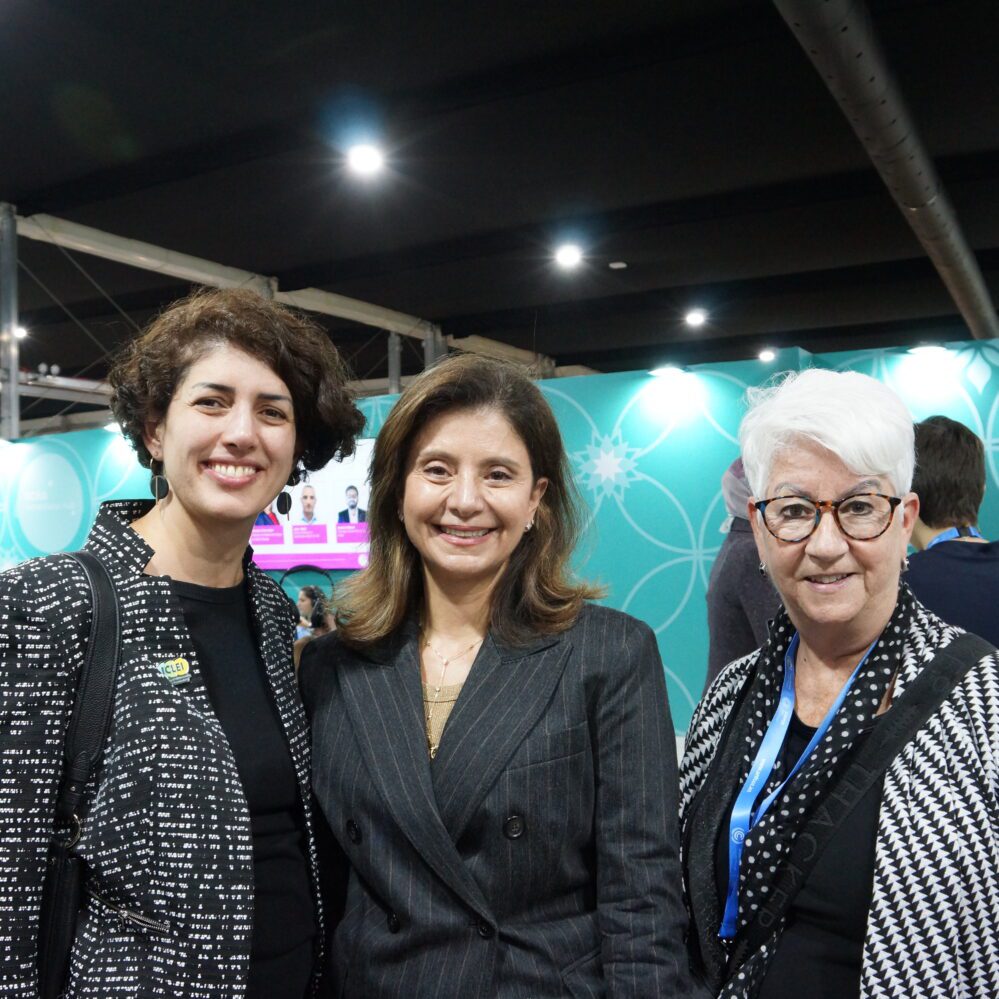
Lessons learned from this multi-year journey were a key part of the Pathways2Resilience Summit, hosted by the City of Budapest, an ICLEI Member, from 10 to 12 February 2026. The Summit convened European regional and local governments, EU leaders, and climate adaptation experts to reflect on what worked, what proved challenging, and what support is still needed to scale climate adaptation across the region.
Orsolya Barsi, Head of the Department of Climate and Environmental Affairs at the City of Budapest, opened the event with some inspirational words: “We meet at a time when cities and regions stand at the forefront of climate action, and our urban areas, like Budapest, are not only highly exposed to climate risks such as heatwaves, flooding, and water scarcity, but they also serve as laboratories for innovation.”
Looking ahead, Barsi emphasized the shift from planning to action across Europe: “Climate resilience strategies are moving from planning to implementation, and the Pathways2Resilience project provides a valuable framework for translating adaptation challenges into step-by-step actions.”
On another panel focusing on the region’s achievements in Pathways2Resilience, Harriet Tiemens, Director, spoke on behalf of the Green Metropolitan Region Arnhem Nijmegen, as an ICLEI Member and ICLEI European Regional Executive Committee (RexCom) representative. Tiemens discussed the value of Pathways2Resilience in prioritizing areas for improved urban development versus flood protection in line with the Dutch Make Room for the River approach. Her words of advice for the second cohort were: “Focus, focus, focus; otherwise it’s too complicated,” especially coming from a region with complex governance arrangements, many stakeholders, and a dense population.
Launched in 2023, Pathways2Resilience now engages a total of 100 local and regional authorities – representing over 100 million residents, or 22% of the EU – in a range of training sessions designed to enhance their preparedness for climate change impacts through proven resilience-planning approaches.
The newly selected regions –home to around 55 million people, more than 12% of the population of the European Union– identified their top climate hazards affecting infrastructure, public safety, and the cultural sector, including coastal and river flooding (43%), heat stress (36%), and droughts (21%).
“I warmly congratulate all regions selected in the second Pathways2Resilience cohort,” said Elina Bardram, Mission Adaptation Manager at the European Commission. “As a flagship initiative, Pathways2Resilience helps the EU Mission on Adaptation deliver on its objectives and advance regional climate resilience together, through tailored support and peer learning.”
Vasileios Latinos, Head of Resilience and Climate Adaptation at ICLEI Europe, said, “Adaptation planning isn’t just about alignment, it’s about acceleration: Breaking silos, scaling what works, and giving cities and regions the shared language and leverage to turn ambition into action. Finding opportunities, through initiatives like Pathways2Resilience, to support local governments is essential to putting theory into practice.”
The newly selected regions join the 38 regions that have started the program in October 2024, gaining valuable peer support and experience. Each region will receive €210,000 in grant funding alongside access to tailored tools and guidance, interactive peer learning, mentoring, and expert guidance.
The cohort will have 18 months to develop a robust climate resilience strategy, as well as an action and investment plan. This second round represents the final allocation of the EU-funded project’s €21 million funding.
Learn more about ICLEI Europe’s work on resilience and climate adaptation across the continent: https://iclei-europe.org/topics/resilience-and-climate-adaptation/.

 News
News