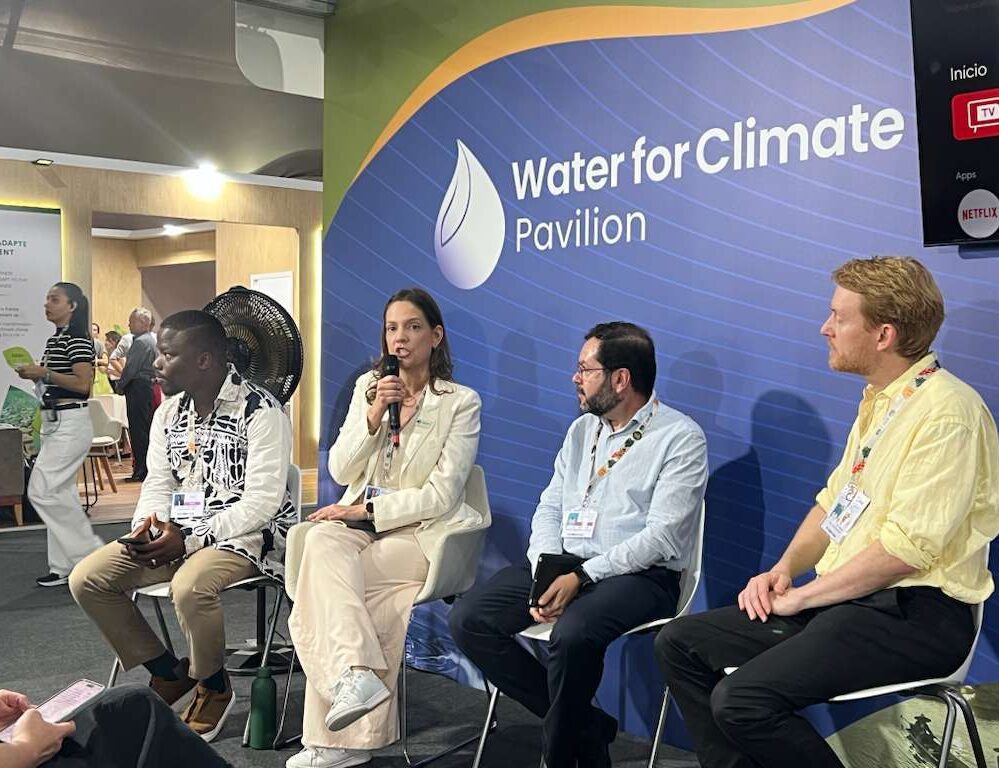

The Catalonia for the Amazon: Climate Justice and Equality Project connects Catalonia (Spain), the State of Amapá (Brazil) and the Department of Guaviare (Colombia) to strengthen climate governance in Amazonian territories.
Climate change is reshaping the way governments cooperate. While international negotiations remain essential, many of the decisions that determine whether climate action succeeds are made closer to the territories themselves. States, regions and cities are increasingly translating global commitments into concrete public policies, demonstrating that local action and international cooperation must go hand in hand.
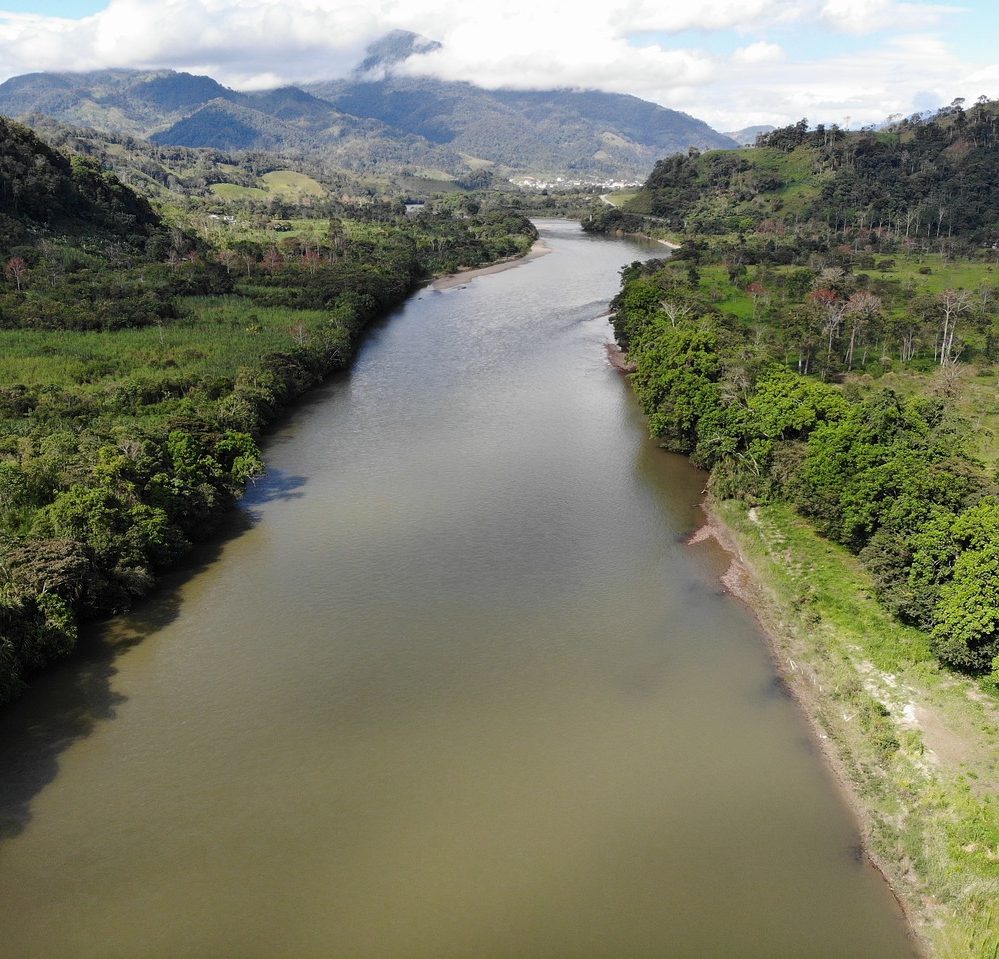
Nowhere is this more evident than in the Amazon. Protecting one of the world’s most important ecosystems requires more than environmental policies. It calls for stronger institutions, inclusive governance and partnerships capable of connecting local priorities with global climate ambitions.
Funded by the Catalan Agency for Development Cooperation (ACCD) and implemented by ICLEI South America Secretariat, the initiative uses a triangular cooperation approach to strengthen institutional capacities, promote climate diplomacy, and embed climate justice and gender equality in climate governance.
Fostering cooperation from the territories
One of the defining characteristics of the project is its collaborative approach. Rather than transferring solutions from one territory to another, the initiative recognizes that every region has valuable knowledge to contribute.
Catalonia shares its experience in climate governance and decentralized cooperation, while Amapá and Guaviare bring perspectives shaped by the realities of the Amazon, where biodiversity conservation, sustainable development and the livelihoods of local communities are deeply interconnected.
This exchange creates opportunities for mutual learning while acknowledging that effective climate policies must respond to each territory’s institutional, social and environmental context. The knowledge generated throughout the project is also expected to support future cooperation with other Amazonian territories, allowing lessons learned to be adapted and expanded over time.
Listening before acting
The project’s first phase has focused on understanding the realities of each territory before proposing solutions. To achieve this, ICLEI has been conducting interviews with representatives from different government secretariats in Amapá and Guaviare. These conversations explore existing climate policies, institutional capacities, governance structures and ongoing initiatives, while also identifying opportunities to better integrate gender equality and human rights into climate action.
This diagnostic process provides the evidence base for the project’s next stages and ensures that future activities respond to locally identified priorities rather than external assumptions.
The next step will expand this dialogue even further. In-person workshops will be held in both territories, bringing together not only government representatives but also local stakeholders, technical institutions, community organizations and other actors involved in climate governance. These collaborative spaces will allow participants to validate findings from the diagnostic phase, exchange experiences and collectively shape strategies adapted to each local context.
Building climate diplomacy
Climate diplomacy is often associated with national governments and multilateral negotiations. Yet subnational governments are playing an increasingly important role in international climate governance, building partnerships, participating in global networks and bringing territorial perspectives into international discussions.
As part of this effort, the project has established a Climate Diplomacy Working Group to foster dialogue among institutions working at different levels of governance. The group provides a space for exchanging perspectives, identifying common priorities and exploring opportunities for collaboration around subnational climate diplomacy.
By bringing together organizations such as the Amazon Cooperation Treaty Organization (OTCA), the Brazilian Cooperation Agency (ABC), the Presidential Agency for International Cooperation of Colombia (APC-Colombia), the Catalan Agency for Development Cooperation (ACCD), participating governments and ICLEI, the Working Group encourages the exchange of experiences and reflections on how subnational governments can strengthen their role in climate diplomacy.
Climate justice as a guiding principle
The impacts of climate change are experienced differently across territories and populations, while Indigenous Peoples, traditional communities, rural populations and women often possess essential knowledge for environmental stewardship and climate resilience. At the same time, these groups continue to face structural barriers to participating fully in decision-making processes.
For this reason, gender equality and human rights are not treated as separate components of the project, but as cross-cutting principles that inform every stage of implementation, from institutional diagnostics and technical exchanges to future climate planning and governance processes.
Building knowledge that lasts
The Catalonia for the Amazon Project seeks to leave a longer-term legacy. The knowledge generated through institutional assessments, technical exchanges and collaborative discussions will contribute to practical outputs such as technical guidance, policy recommendations and a roadmap for continued cooperation. These resources are intended to strengthen institutional capacities while supporting future climate policies that are both rights-based and gender-responsive.
Ultimately, the project demonstrates that international cooperation is most effective when it begins by listening to territories, valuing local knowledge and building solutions collectively. By connecting governments across continents while placing climate justice, gender equality and local leadership at the centre of climate action, the Catalonia for the Amazon Project illustrates how subnational cooperation can become a powerful driver of more inclusive and resilient climate governance.
 News
News