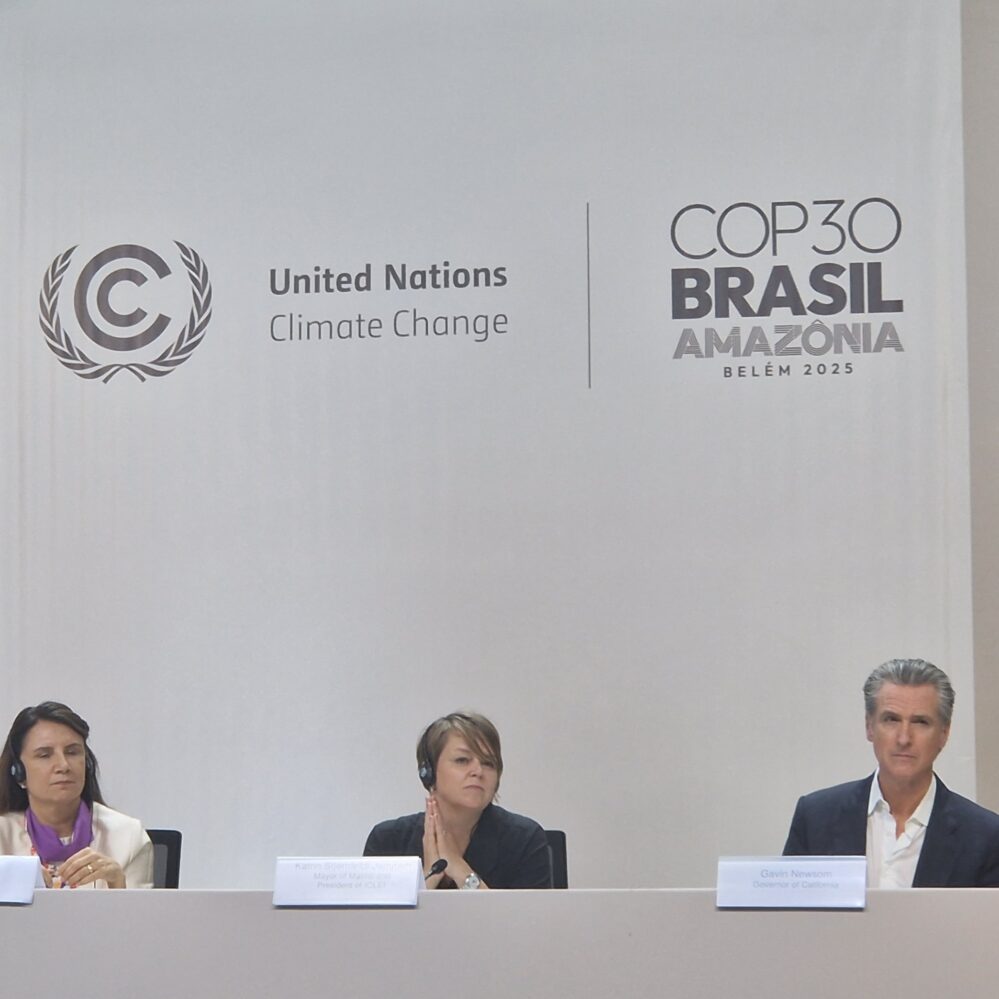

On 21 March 2026, Kaohsiung hosted the third CityCOP Forum, co-convened by the Kaohsiung City Government and ICLEI – Local Governments for Sustainability as part of the Kaohsiung Smart City Summit & Expo. Under the theme Flourishing Cities for All: Science-based and People-Centered Climate Transitions, the forum brought together city leaders, scientists, and innovators to explore how climate action can move beyond emissions targets to focus on what ultimately matters most: Improving people’s lives.
The event highlighted the leadership of cities participating in the Kaohsiung-ICLEI Climate Neutral and Smart Cities Community of Practice, including Penang Island (Malaysia); Goyang Special City (Republic of Korea); Newcastle and Adelaide (Australia), and Kyoto (Japan). Discussions were further enriched by leading voices working at the intersection of science, innovation, and urban climate action.
Mayor Chen Chi-mai of Kaohsiung emphasized that although the city accounts for roughly one-fifth of Taiwan’s emissions, the city has already achieved measurable reductions since 2005, through pioneer initiatives such as a city-level carbon budget, industrial alliances, and growing institutional capacity for net-zero governance. His message was that international exchange is not about visibility. It is about connecting science with implementation and building a broader Community of Practice that can move faster together.
At the heart of the CityCop was the concept of Flourishing Lives for All, an initiative that places human-needs-based innovation at the center of urban transformation, building momentum toward a city-led agenda for what comes after the SDGs.
This theme was developed together with the FlourishingLives 4 All initiative – emerged from Mission Innovation – and with United Nations University. It has been shaped with support from leading experts from the UNFCCC Global Innovation Hub and leading IPCC scientists.
Dennis Pamlin, Executive Director, Flourishing Lives 4 All, argued that cities must ask not only what emissions they are cutting, but what kind of future they are building. He proposed measuring progress through “flourishing life years,” a concept that captures quality of life, dignity, and opportunity.
Pourya Salehi, Head of Urban Research, Innovation and Development at ICLEI, noted that climate leadership must go beyond limits and targets to articulate a positive vision for the future. He emphasized that the Flourishing Lives 4 All agenda connects climate action to hope, dignity, and well-being. He positioned Kaohsiung not just as a host, but as an active leader shaping this agenda through the Kaohsiung-ICLEI Community of Practice.
Debra Roberts, Co-Chair of IPCC Working Group II, highlighted the significance of the upcoming IPCC Special Report on Climate Change and Cities, expected in 2027. As the first IPCC report to include urban practitioners alongside researchers as authors, it offers a unique opportunity to place cities at the center of global climate science and policy. She also stressed that flourishing lives must include adaptation, equity, and the resilience of communities facing the most severe climate impacts.
ComP cities representatives shared practical examples of how this vision is already being put into action. Newcastle is integrating arts, culture, and well-being into its climate strategy to strengthen community engagement. Penang Island is linking heat adaptation with local economic vitality while requiring solar, rainwater harvesting, and EV infrastructure in new developments. Goyang Special City is using digital twins to quantify the resilience benefits of wetlands and green corridors. Kyoto is drawing on cultural values to connect sustainability with everyday life, while Adelaide is combining renewable energy expansion with partnerships that support livability and inclusive urban growth.
The 2026 Kaohsiung CityCOP demonstrated that the next generation of climate leadership is not only about reaching net zero. It is about creating cities where people can flourish on a thriving planet, and where collaboration, science, and innovation come together to turn ambition into action.
 News
News