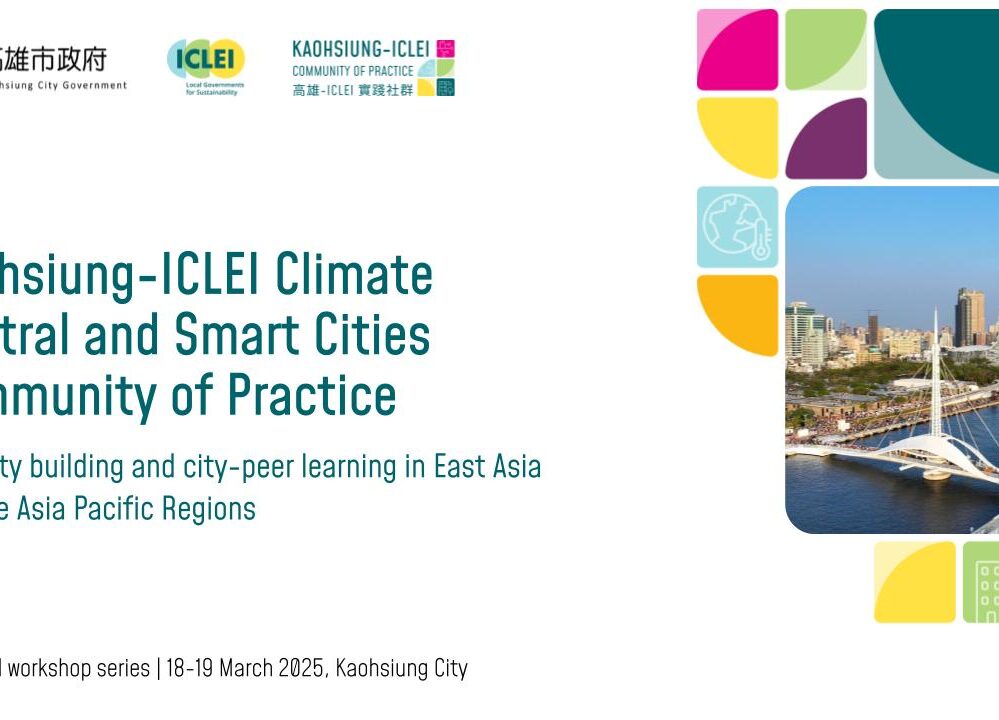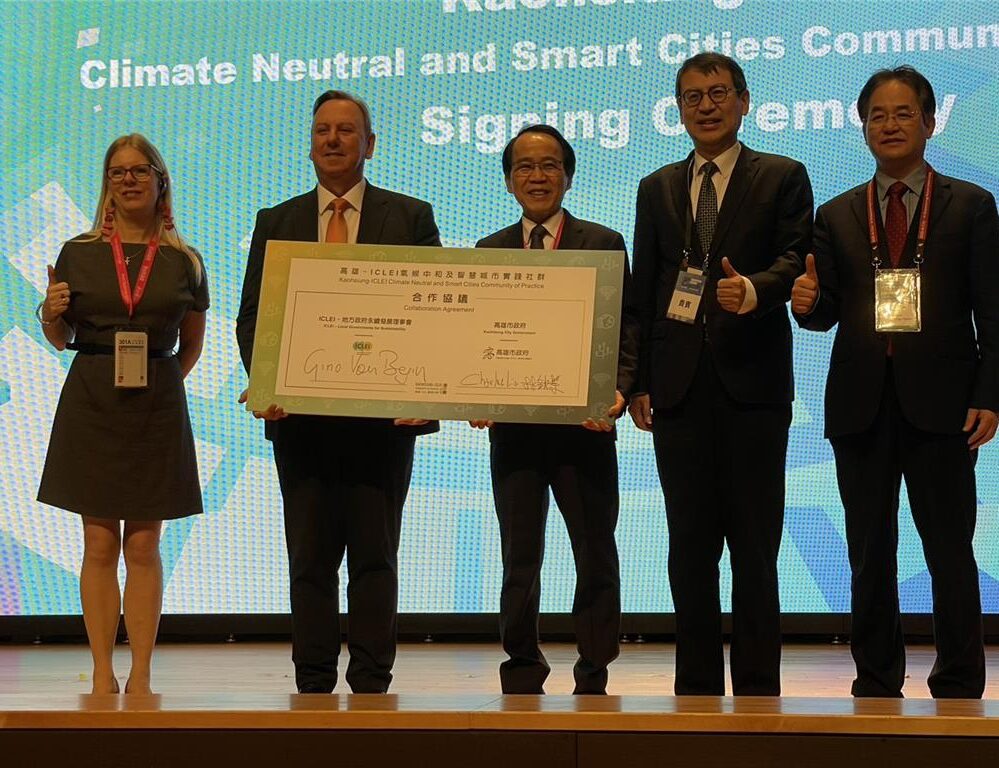

As part of the program led by ICLEI, the third in-person thematic capacity-building workshop series is held on 18-19 March, hosted by Kaohsiung City, Chair of the ComP.
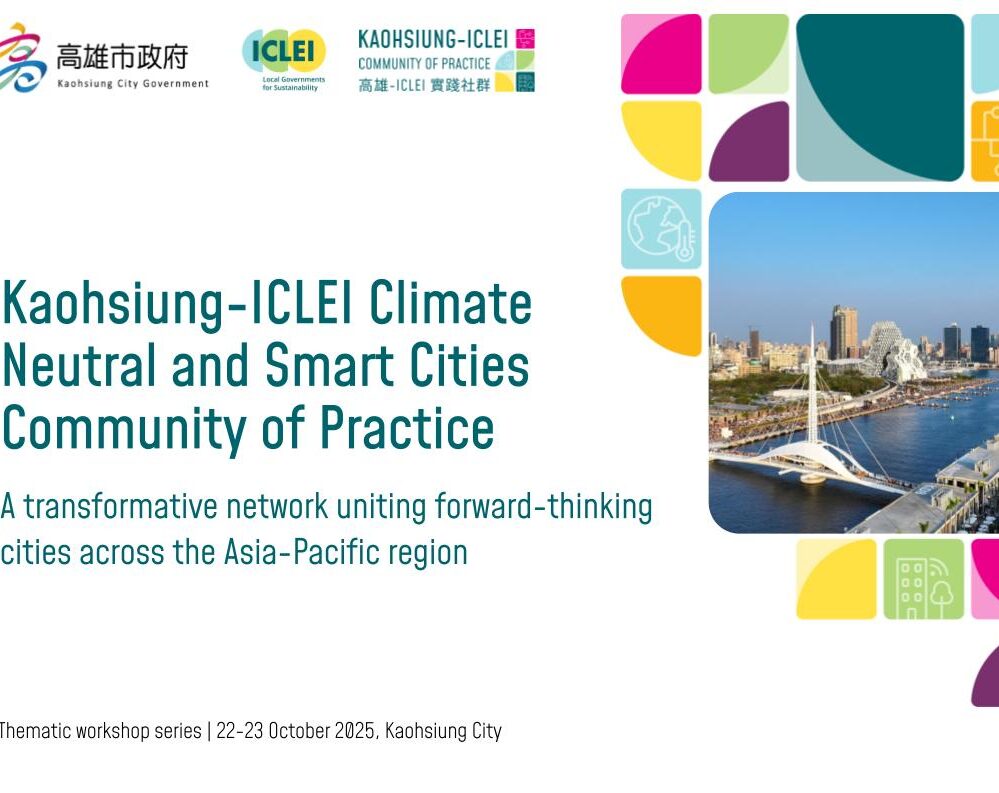
The Kaohsiung-ICLEI Climate Neutral and Smart Cities Community of Practice (ComP) is a two-year, city-led platform for the Asia-Pacific region and beyond, chaired by Kaohsiung and implemented by ICLEI – Local Governments for Sustainability, through its World Secretariat and the ICLEI Kaohsiung Capacity Center.
The Community of Practice currently brings together 14 leading cities: Batangas, Iloilo City, Pasig City, and Quezon City (Philippines); Adelaide and Newcastle (Australia); Goyang and Gwangmyeong (Republic of Korea); Kyoto and Yokohama (Japan); Pune (India); Penang Island (Malaysia); Dortmund (Germany); and Oakland (United States). Together with the chair city of Kaohsiung, these cities form a growing network of local leaders collaborating to advance climate-neutral and smart urban development
Through capacity-building workshops and peer-learning, the ComP aims to co-create “next practices” across transformative innovation, circular economy, energy transition, sustainable urban planning, smart and resilient mobility, and innovative finance.
On 18-19 March, the ComP convenes its third in-person capacity-building workshop series, hosted by Kaohsiung City at its pioneer Net Zero Institute, where invited experts and city practitioners will exchange throughout a two-day thematic program focused on transition planning and sustainable energy systems for a net-zero future. With nine of the 14 ComP cities participating in person, the workshop will enable a vibrant exchange of ideas not only across the Asia-Pacific region, but also beyond regional boundaries.
Discussions will surface findings, good practices, and lessons from global initiatives, drawing on expertise from international experts representing ClimateView, the United Nations University (UNU-EHS), RE100, Mission Innovation, and more.
Committed to fostering knowledge exchange and collaboration between the City of Kaohsiung, participating cities, the private sector, as well as local and international industry leaders, international organizations, and innovators, the March workshop series offers a dynamic space for learning and experimentation. Through hands-on exercises, cities will work directly with experts and fellow practitioners to translate climate commitments into practical strategies.
Turning climate ambition into structured transition pathways
On the first day, the program focuses on helping cities move from climate planning to implementation. The session explores how governance frameworks, policy design, and analytical tools can support cities in translating Climate Action Plans (CAPs) into structured and financeable transition pathways.
Participants will engage in hands-on exercises applying ClimateView’s Transition Element Framework (TEF) -an analytical framework grounded in IPCC mitigation pathways and scientific evidence- to break down high-level climate targets into concrete transition shifts, policy interventions, and measurable indicators.
To anchor the discussions in real city contexts, participants will explore AI-enabled tools that support climate planning by helping cities assess how well their Climate Action Plans align with transition principles and identify context-specific policy interventions. The tools illustrate how actions -from mobility investments to parking policies- can influence behavioral change and deliver measurable outcomes such as emissions reductions, improved air quality, and reduced infrastructure costs.
Transforming local energy systems for a net-zero future
The thematic workshop on Day 2 is particularly timely, as it focuses on one of the most critical challenges for cities worldwide: Transforming local energy systems to achieve climate neutrality.
For many Asia-Pacific cities, particularly those with strong industrial bases, decarbonizing energy systems while maintaining resilience, economic competitiveness, and energy security is both a shared challenge and a significant opportunity.
The workshop will explore themes such as industrial decarbonization, renewable energy integration, energy efficiency, energy storage, and community engagement, while participating cities will also present their own local initiatives.
An interactive serious game simulation based on ICLEI’s Sustainable Energy Transition Strategy (SETS) game, will allow participants to engage in a role-playing exercise on the perspectives of different stakeholders -including industry, civil society, and local governments- to explore potential energy transition solutions, negotiate partnerships, and better understand the complex dynamics that shape real-world energy decisions.
This third in-person workshop series builds on previous Community of Practice exchanges, including the inaugural workshop series held in March 2025, which focused on circular development and transformative innovation, as well as subsequent capacity-building workshops on sustainable mobility and innovative finance last October.
This unique convergence of expertise, peer exchange, and hands-on learning will help participants explore new approaches to climate governance, test innovative tools, and develop solutions that can be adapted and implemented in their own cities.
Kaohsiung CityCOP Forum: Flourishing Cities for All
Conversations will continue at the 3rd Kaohsiung CityCOP Forum on 21 March, the highlight event of the Kaohsiung Smart City Summit & Expo. Convened by ICLEI in partnership with the City of Kaohsiung, the forum will bring together global experts, city leaders, and innovators to explore pathways toward Flourishing Lives 4 All, reflect on the upcoming IPCC Special Report on Cities, and exchange solutions with strong potential for replication across cities worldwide.
The CityCOP will showcase the global leadership of Community of Practice member cities, featuring speakers including Cheah Chin Kooi, Engineering Director, City Council of Penang Island (Malaysia); Jae Seon Jeong, Executive Director of the Climate & Environment Bureau, Goyang Special City (Republic of Korea); Heath Stevens, Climate Change & Sustainability Manager, City of Newcastle (Australia); Mioko Yabuki, Director of the Global Environment Policy Office, City of Kyoto (Japan); and Ilia Houridis, Director of City Shaping, City of Adelaide (Australia).
The Forum will also feature insights from ComP experts, including Dennis Pamlin, Executive Director, Flourishing Lives 4 All; Simone Sandholz, Lead, Urban Futures & Sustainability Transformation Programme, United Nations University (UNU-EHS), and other leading voices working at the intersection of science, innovation, and urban climate action.
 News
News