
At the SB64, ICLEI showcased practical tools and real-world examples that are helping bridge the gap between young climate leaders and local governments.
“What do you think of when you hear ‘local climate policy’?”
This question guided conversations with young leaders in the lead-up to and during SB64, where ICLEI contributed to two dedicated youth engagement sessions. Across both, one message stood out: Local and regional governments play a key role in empowering youth. As the closest level to communities, they can create inclusive policies, allocate resources, and enable meaningful youth participation in local planning.
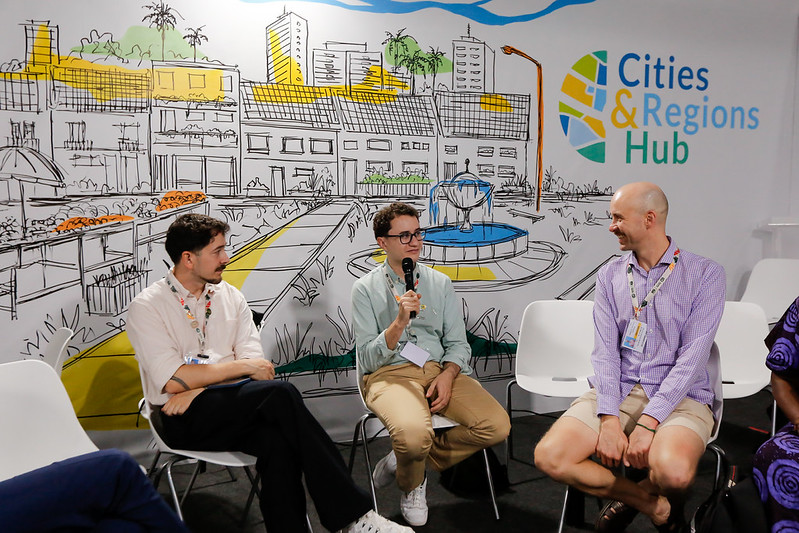
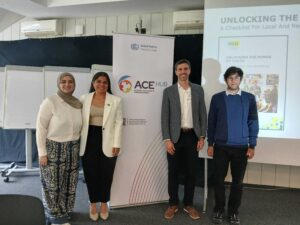
On 4 June, ICLEI led the session Approaching Local Governments: Best Practices for Youth to Local Government Communication as part of the Action for Climate Empowerment (ACE) Hub Youth Event. A collaboration between the Ministry of Economic Affairs, Industry, Climate Action and Energy of the Federal State of North Rhine-Westphalia (NRW) and UN Climate Change, the ACE Hub empowers all members of society to engage in climate action, with a strong focus on children and young people.
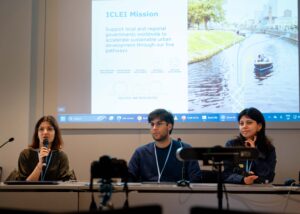
The conversation continued on 17 June at SB64, where ICLEI presented insights to YOUNGO, the official children and youth constituency to the UNFCCC. In both sessions, participants explored ICLEI’s Unlocking the Power of Youth: A Checklist for Local and Regional Governments and reflected on their own experiences communicating with municipalities.
These sessions reflected ICLEI’s broader Vision on Youth Engagement in Global Climate Action, launched at COP27 and built around three pillars: advocacy, knowledge sharing and capacity development, and governance. Developed in collaboration with YOUNGO, with whom ICLEI has worked closely since 2015, the vision recognizes young people as essential partners in climate governance and calls for their meaningful participation in decision-making at every level.
“Meaningful youth inclusion goes far beyond inviting young people to the table. It means creating long-term opportunities to co-design policies, contribute to decision-making and build lasting partnerships with local governments,” reflected Karishma Asarpota, Senior Officer, Climate Action team at ICLEI.
Across its global network, ICLEI is putting this vision into practice through concrete initiatives. The Town Hall COP model invites local governments and communities to bring the global climate movement home by hosting local climate summits. As a community-centered process, it calls for the inclusion of diverse voices, from local government representatives and civil society to the private sector, youth and other actors who form the backbone of their communities. In 2025, more than 50 communities across six continents hosted Town Hall COPs, with youth actively participating and hosting their own events.
As an implementation partner, ICLEI has also supported youth engagement through several projects worldwide. Some ongoing projects include the AfriFOODlinks Youth Ambassadorship Programme which enables youth ambassadors in Africa and Europe to work directly with mayors and city officials on sustainable food systems. The Safe and Sound Cities Programme has engaged more than 10,000 young people in urban research, innovation and community action, with a special focus on cities in the Philippines, Indonesia, Colombia and Ecuador. And the Nature-Based Solutions Youth Inclusion Toolkit offers practical methods for embedding youth perspectives into nature-based solutions in cities.
As countries move from national climate commitments to implementation, success will depend on stronger partnerships across all levels of society. Young people are already driving innovation, mobilizing communities and developing solutions. By connecting youth with local governments and global decision-making processes, ICLEI is committed to turn inclusion into action, ensuring that young people are not only heard, but are active partners in shaping more sustainable, resilient and equitable communities.
 News
News