
The Rhine, which flows through Bonn, Germany, is at its lowest level ever recorded, according to the city’s Deputy Mayor, Ursula Sautter. At the same time, Bonn’s sewers were not built for the heavy rainfall that now hits the city. And the city cannot spend an additional euro on new measures: its budget is frozen.
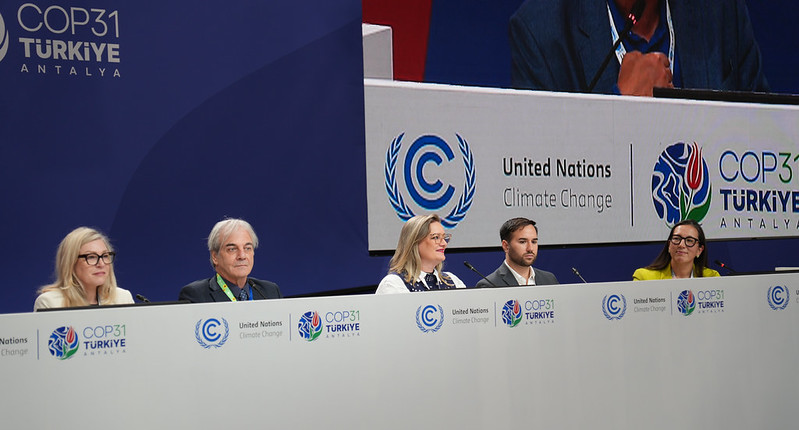
“Laws are passed, but they’re not backed up by finance,” Sautter said at a session on climate finance for resilient cities at the Multilevel Action Pavilion at COP31 in Antalya, Türkiye, on 17 November 2026. “If you don’t have the money to implement all these measures, you’re going to have a problem.”
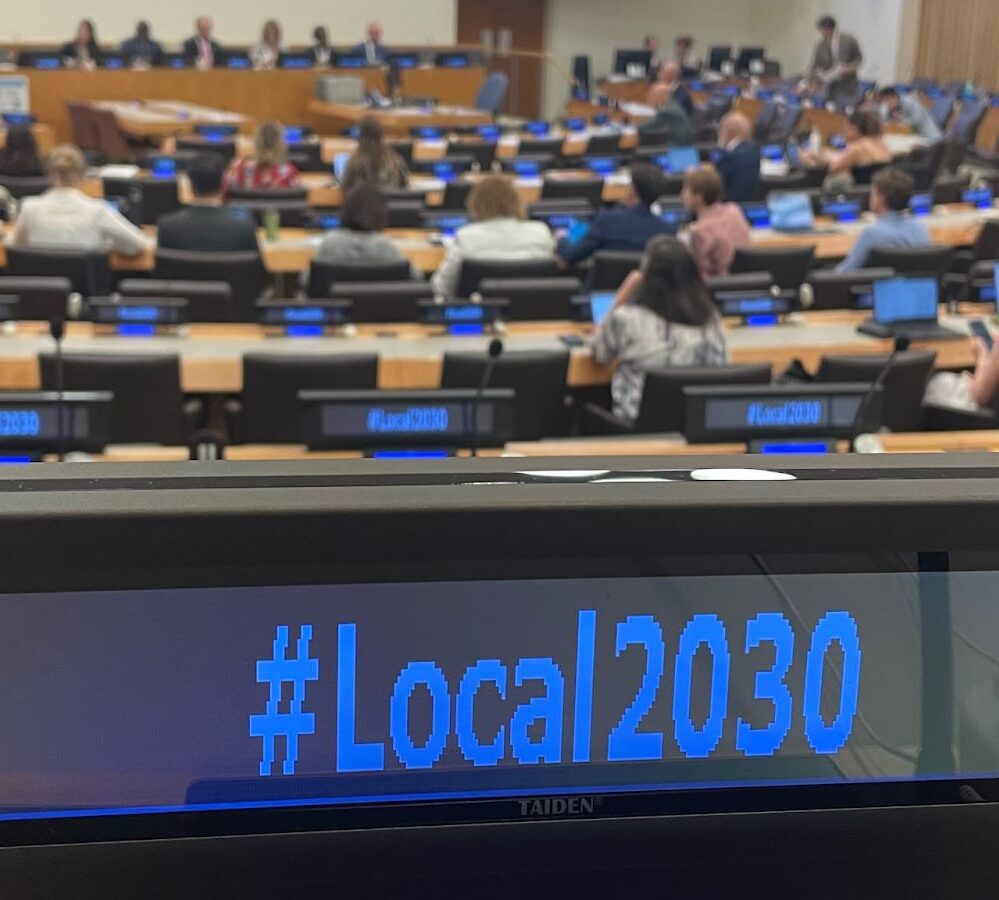
Her experience reflects a global pattern. A UN-Habitat analysis of 142 new national climate plans found that four out of five include at least one mechanism to enable urban climate action, such as multilevel governance or local capacity building. Only 19 percent include dedicated mechanisms to finance it. The session, organized by ICLEI – Local Governments for Sustainability, brought together local and state governments from Germany and Mexico to discuss how to close that gap.
Same risks, two continents
San Nicolás de los Garza, in Nuevo León, Mexico, is a city of around 380,000 people. Mayor Daniel Carrillo Martínez described a region that has lived through Hurricane Alex in 2010, a severe water crisis in 2022, and Tropical Storm Alberto in 2024. “We need to prepare for water scarcity as well as for water excess,” he said.
The city has invested in rainwater capture and tree planting. But the mayor was clear about the barriers to scaling up. “We can identify the risk, define the project, a maintenance plan and indicators to verify the results. But in the end, the term of a local government is too short, or the application bureaucracy too large, and we fail to achieve the project.” He added that municipalities lack the [creditworthiness] of national governments, “but it’s in the city where the most important changes take place.”
What support from the state level can look like
North Rhine-Westphalia is Germany’s most populous federal state, with 18 million people. State Secretary Viktor Haase said the 2021 floods and this year’s record heat and low water levels had changed how the state sees climate risk. “We know damage mostly happens at the local level,” he said. “And we know at the same time that municipalities can’t manage it alone.”
In October 2026, the state amended its Climate Adaptation Act. Municipalities must now develop climate adaptation concepts and the state is financing them. The state also provides municipalities with data on weather, climate risks, and future projections through the State Agency for Nature, Environment and Climate (LANUK) and its Klimaatlas NRW.
Haase set out three priorities for adaptation finance:
- Make adaptation part of every investment from the start, whether in a street, a building, or a whole district.
- Assess climate risk over the full life cycle of public investments, including in public procurement.
- Move away from project-by-project funding. “We need a reliable funding base for municipalities,” he said.
Germany is currently debating a constitutional amendment that would make climate adaptation a joint task of the federal and state governments, allowing them to share its costs.
Risks don’t stop at city limits
Sautter recalled that during recent floods, Bonn had done everything it needed to do, but water still arrived from a neighboring district that had not built retention basins. “Land, water and air are fluid; they cross boundaries,” she said.
Bonn is now developing a Natural Capital Fund with partners in the surrounding region, a regional investment model already being tested on pilot sites. Companies and landowners that benefit from flood protection help finance water retention measures on nearby land.
David Jácome-Polit, Head of Resilient Development at the ICLEI World Secretariat, said this connects to a broader point: water, food, and energy systems extend beyond the jurisdiction of any single city.
What this means for COP31
The Local Governments and Municipal Authorities (LGMA) Constituency calls on Parties to embed multilevel climate finance and access for local and subnational governments across key finance processes. This includes direct access options through the Climate Finance Work Programme, Country Platforms, the Fund for Responding to Loss and Damage, and the Global Goal on Adaptation.
As Mayor Carrillo Martínez put it: “Support city projects before a disaster strikes. We cannot decide when the next storm will come, but we can decide how we are going to [respond].”
 Blogs