COP30 launch of ProUrbano brings together two complementary facilities to help cities protect people, infrastructure, and livelihoods.
ICLEI at COP30
In Belém, the ICLEI network showcased the strength of cities and regions and demanded bold action from Parties
Cities and regions are already implementing solutions and are ready to scale them
As COP30 drew to a close, local and regional governments spoke with one voice: Put cities and regions at the heart of the Paris Agreement’s implementation phase. While this was not fully reflected in the final outcomes, ICLEI remains steadfast in our commitment to drive local solutions that power global climate action.
To date, only around a quarter of national climate commitments meaningfully integrate urban priorities, leaving a significant gap between where emissions are generated and where solutions can be delivered.
Considering all political and logistical challenges, cities and regions in the ICLEI network had an opportunity to play the role of solutions-provider, and provide wins for all parties and stakeholders.
ICLEI sent to COP30 more than 120 local and regional leaders and more than 70 staff to advocate for subnationals in the climate agenda.
The climate action the world needs starts in cities, states, towns and regions
ICLEI welcomes key outcomes on the just transition and the promise of the COP30 Presidency-led fossil fuel transition and deforestation roadmaps, as well as recognition in the Mutirão text on cities and multilevel climate action.
However, an agreement that only slightly moves the dial forward on climate is a deal that does not acknowledge the truth of the urgency of our situation.
Leaders of our towns, cities, regions and states around the world are acknowledging this urgency and are moving to act. What COP30 showed us is that the path to scaling local and subnational action on climate will not only pass through the plenary halls of COP.
As we move forward, the local and regional governments of the ICLEI network are taking the climate actions the world needs. Now the world needs the COP process to step up and support us – because the climate action the world needs starts in cities, states, towns and regions.
Read ICLEI leaders COP30 outcomes statementICLEI's announcements at COP30
The ICLEI Network brought a host of new solutions and announcements to COP30, elevating the role of subnationals on the global stage.
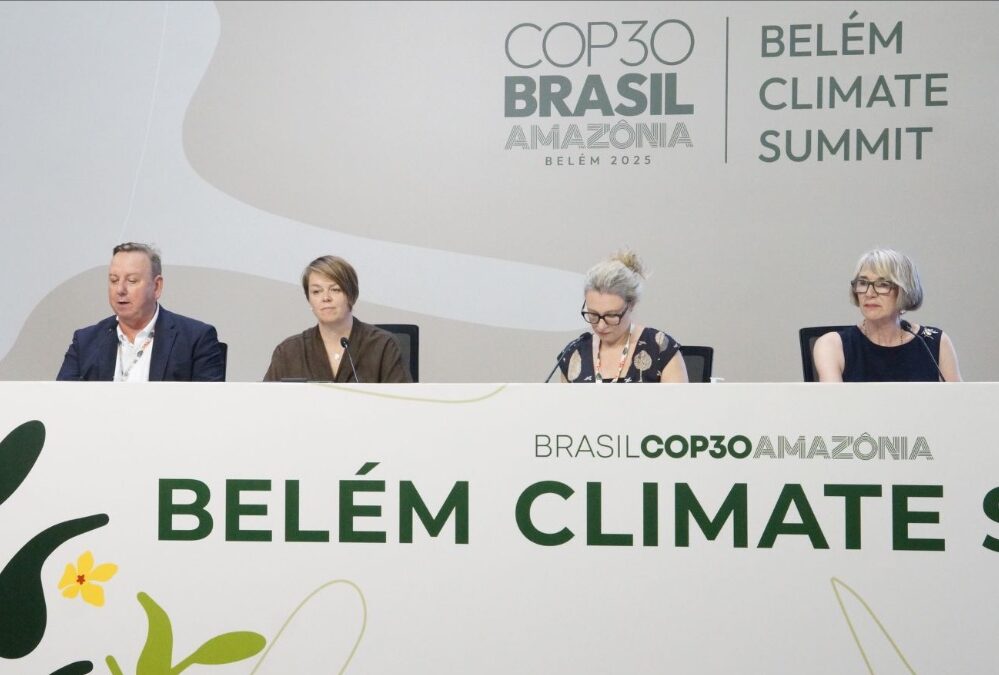
ICLEI President Mayor Jammeh and ICLEI Vice President Mohamed Sefiani, Mayor of Chefchaouen, Morocco, joined delegations engaging directly with UN Secretary-General António Guterres and Brazil’s President Luiz Inácio Lula da Silva, respectively.
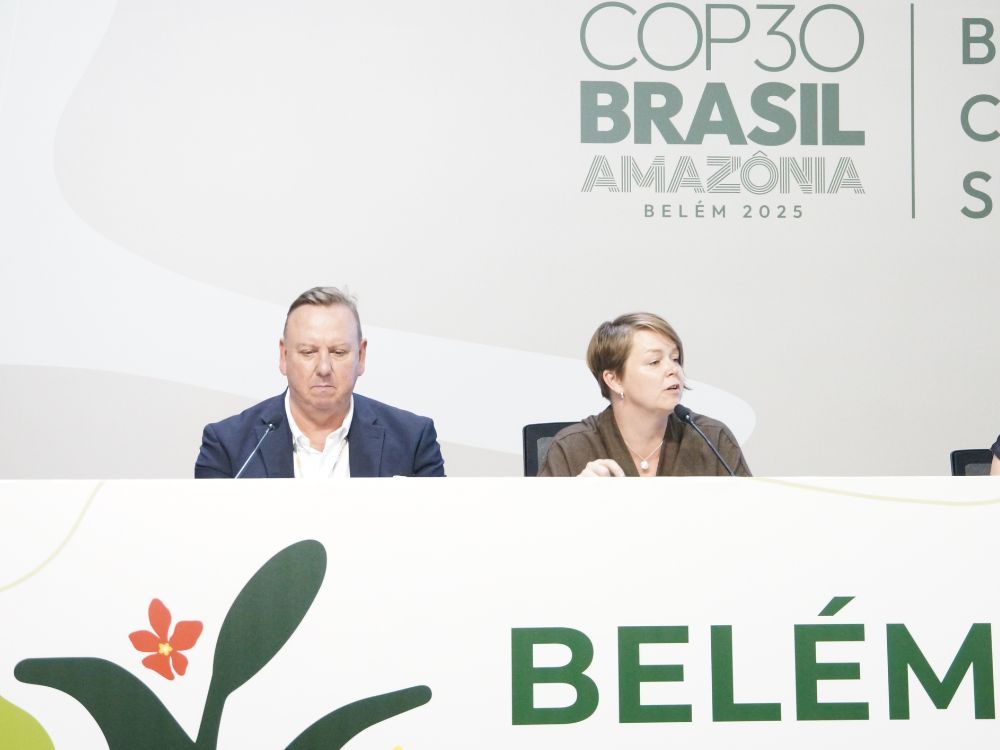
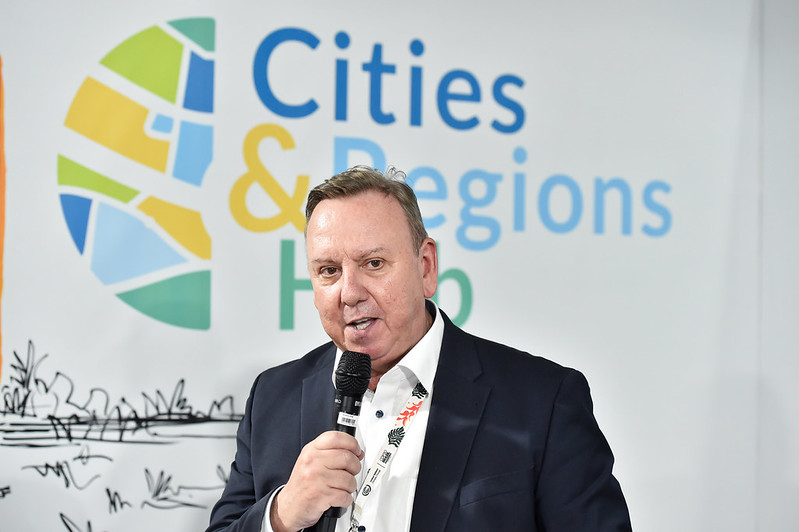
ICLEI President and Mayor of Malmö, Sweden, brought the message that cities and regions are already implementing solutions and are ready to scale them.
ICLEI South America formalized two strategic partnerships with FONPLATA and Banco do Nordeste to support green finance investments and access to innovative financing solutions for cities.
Progress was made at COP30, yet, for African cities—among the world’s most climate-vulnerable continents—crucial means of implementation were not agreed to. However, a successful G20 sets the stage for a stronger, Africa-led COP32 in Ethiopia.
ICLEI Oceania elevated the voices, priorities and solutions of its cities and regions. Looking ahead, it remains firmly committed to elevating multilevel action and urbanization in climate implementation.
The Statement, a result from the COP30 Local Leaders Forum, was handed over by a delegations of leaders, including ICLEI President Mayor Katrin Stjernfeldt Jammeh.
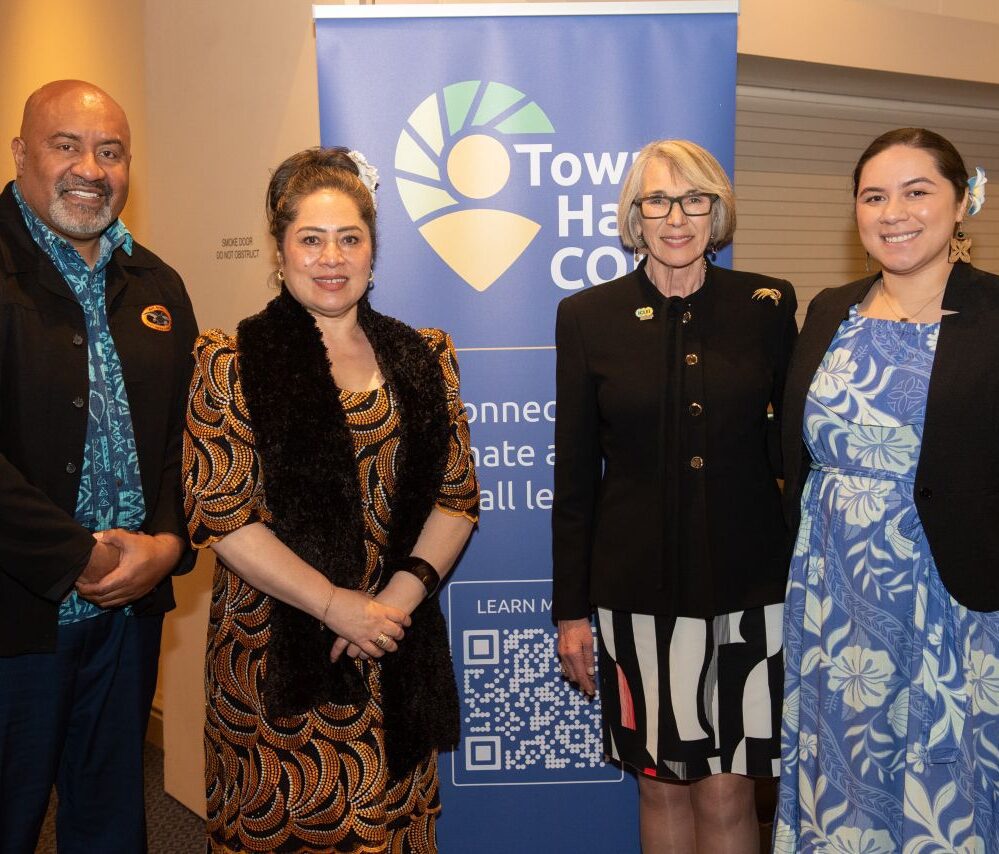
ICLEI's global Town Hall COP initiative landed at COP30 with insightful sessions highlighting the approach as a new tool for multilevel governance and urbanization.
Former U.S. Ambassador Nina Hachigian, the first U.S. Special Representative for City and State Diplomacy and former Los Angeles Deputy Mayor for International Affairs, will serve as a Senior Advisor to the ICLEI USA Board. Through this collaboration, ICLEI USA and Ambassador Hachigian will strengthen connections between U.S. local governments and their international peers for joint action on climate and sustainability.
The Heat Implementation Drive is a joint initiative of the COP30 Presidency and the UNEP-led Cool Coalition. It aims to accelerate the deployment of sustainable cooling and heat-resilience solutions in cities worldwide. ICLEI is proud to collaborate with 80+ partners on this critical effort.
Announced on 4 November at the COP30 Local Leaders Forum, cities are showing how local leadership drives global climate progress.
ICLEI’s COP30 Agenda
ICLEI Members, leaders and experts participated in dozens of interventions, sessions and events throughout the two weeks of COP, on themes including:
- Just transition leadership by cities and regions
- Food, waste management and circular development
- Nature positive strategies and nature-based solutions
- Resilient urban energy systems
- Unlocking subnational climate finance
- Town Hall COPs and other strategies for multilevel climate partnerships
- Urban water resilience
Stories from COP30
All the highlights from local and regional leaders on the ground.
Belém, host city of COP30, is showing that protecting the Amazon means empowering its cities and people. With its Local Climate Action Plan, nature-based solutions and a 2050 climate-neutral vision, Belém is emerging as a model of urban resilience.
The project is now part of the global platform showcasing more than 300 climate initiatives already delivering tangible climate action impact.
Co-organized by the International Federation of Red Cross and Red Crescent Societies, ICLEI, and the Lincoln Institute of Land Policy, this session highlighted that adaptation is local, but real progress depends on collective action, finance, and listening to communities.
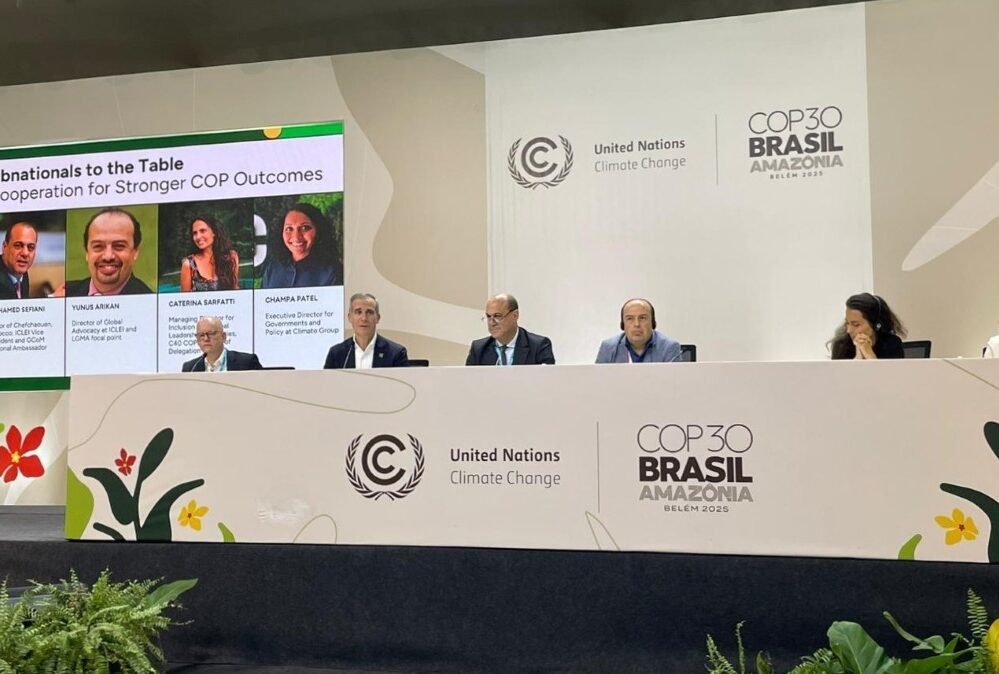
Co-convened by ICLEI, as the focal point for the LGMA Constituency, and partners, this pioneering multilevel coordination effort brings climate federalism to life: National, state, and local actors aligning positions, sharing knowledge, and building a unified narrative for COP30 and beyond.
The visit, co-organized by IUCN, UNEP, ICLEI, BMUKN, and the IKI, brought together key representatives, including Minister Carsten Schneider, Antônio da Costa e Silva, the National Secretary of Brazil’s Minister of Cities, and Igor Normando, Mayor of Belém.
The Climate Mobility Pavilion hosted a timely discussion on how cities can anticipate and plan for climate-induced population movements. Leaders and experts reflected on how human mobility is reshaping African and global cities and what a proactive, inclusive, and dignified response looks like.
17–18 November marked COP30 days dedicated to planetary and community stewardship, with a strong focus on youth. YOUNGO, the official children and youth constituency to the UNFCCC, is advocating for multi-generational priorities into the negotiations.
At the Water for Climate Pavilion, ICLEI highlighted that managing water resources and protecting natural ecosystems are fundamental to building resilience against climate shocks.
Moira Were, Mayor of the City of Onkaparinga and ICLEI GexCom Member, shares how coastal degradation and climate impacts are transforming South Australia’s shores and communities. HY William Chan, Former Councillor of Sydney and ICLEI Oceania RexCom Member, reflects on the growing role of cities in global climate negotiations.
Meet the artist behind the vivid one-of-a-kind illustrations (created with acrylic paint and marker brush) at the COP30 Cities & Regions Hub: Daniel Jacaré.
high-level delegates visited Barcarena, State of Pará, Brazil, for an immersive experience on Urban Resilience and Disaster Risk Reduction in the Amazon. ICLEI was represented by Rodrigo Perpétuo, Executive Director of ICLEI South America, as co-coordinator for MCR2030 for Latin America.
On 12 November, Australia’s National Pavilion hosted a high-level workshop showcasing insights from Town Hall COPs hosted in Adelaide and Greater Sydney, as well as Kiribati.
Co-organized by ICLEI Cities Biodiversity Center (CBC) and Regions4, this insightful session explored how local and subnational governments are effectively bridging the climate, biodiversity, and land restoration agendas to move from ambition to measurable results.
Local leaders from across the United States joined convened in Rio de Janeiro for the C40 World Mayors Summit and the COP30 Local Leaders Forum. Every story, side conversation, and session carried a message of hope: Local governments are turning ambition into results, and that collaboration is how we move forward.
U.S. mayors joined peers from around the world for the C40 World Mayors Summit in Rio and COP30 in Belém. This delegation included African American Mayors Association (AAMA) leaders, including a group participating in ICLEI USA’s Mayors Climate Action Training Program.
As a signatory to the Climate Champions’ Food Systems Call to Action, ICLEI’s Global CityFood Program will showcase city-led solutions and its commitment to a just transition and collective action across several COP30 events.
Preview ICLEI’s engagement at COP30 in our latest newsletter.
Subnational leaders are gathering in Rio to bring local climate solutions and chart a path forward grounded in the Global Mutirão call for collective action.
New resources launched
Every year, ICLEI works with local and regional governments, partners, leaders, and experts to develop and publish state-of-the-art knowledge products. At COP30, we introduced new resources covering a wide range of themes, including:
- Guidebook: From Incentivizing to Empowering: A Practitioner’s Guide to Equitable Climate Action in Cities
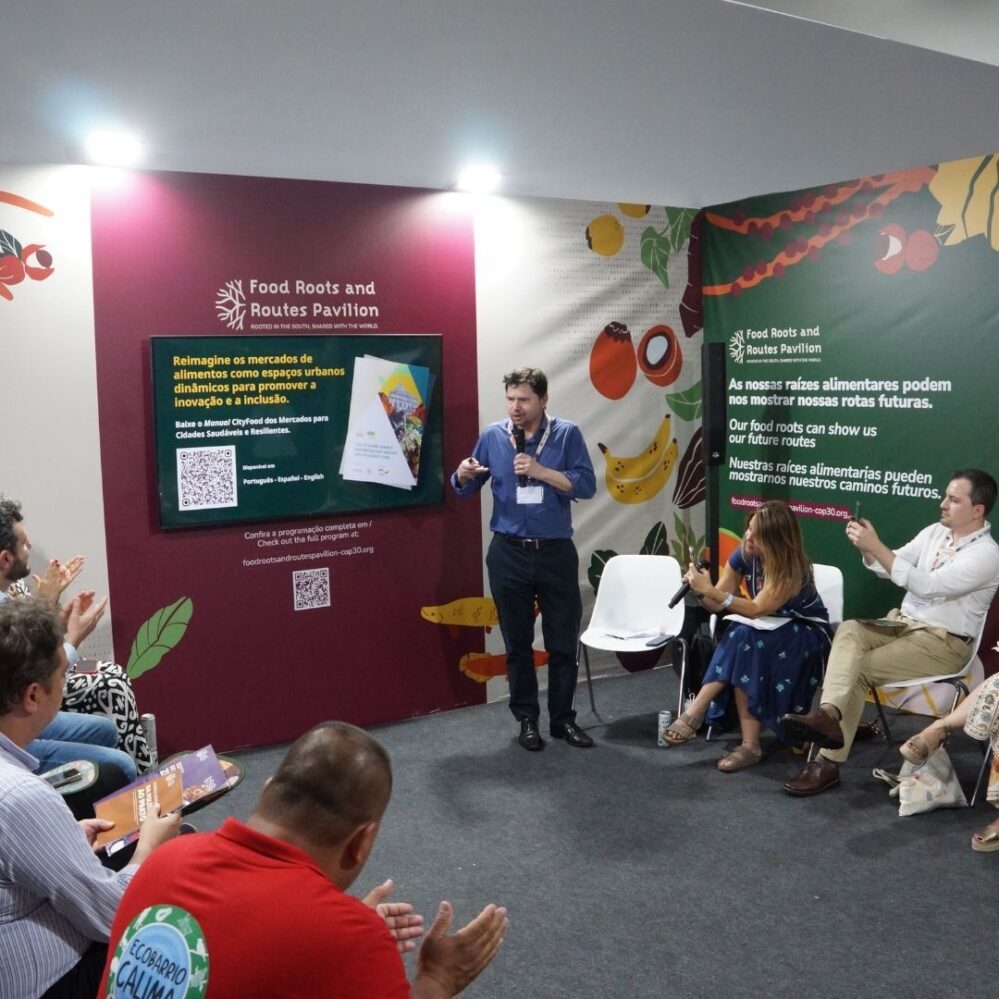
- CityFood Market Handbook for Healthy and Resilient Cities 2nd Edition
- Convening Town Hall COPs across Sub-Saharan Africa
- Ecosystem Services Diagnosis of Belém
- No Time To Waste: Improving waste management in African cities
- Financing and ownership models for municipal embedded generation
- Navigating the regulatory landscape for early-stage embedded generation projects
- LGMA Compendium of National Mobilization Strategies
- ICLEI carbonn Climate Center Solutions Gateway
Cities, states and regions ready to move beyond recognition to collaborative implementation
“The goal to make this the COP of implementation was the right one, but the final outcomes failed to deliver a mandated framework that includes local and other subnational governments,” reads the statement by the Local Governments and Municipal Authorities (LGMA) Constituency, of which ICLEI serves as the UNFCCC focal point. Nevertheless, local and other subnational governments will build on Belém’s outcomes to put multilevel action and urbanization at the service of global climate implementation.
Read the press release
ICLEI in the Amazon and Belém
Since 2019, ICLEI has been increasingly active in the Amazon region by building strong relations with local actors and authorities to understand local urban dynamics and co-develop solutions that advance sustainable development while safeguarding the forest.
With the world zooming in on Belém, an ICLEI Member since 2022, this work now takes on renewed force and visibility. Through coordinated efforts between the ICLEI World Secretariat, ICLEI South America, and our regional offices in Brazil and Colombia, we’re placing Amazonian cities and regions at the heart of global climate action.
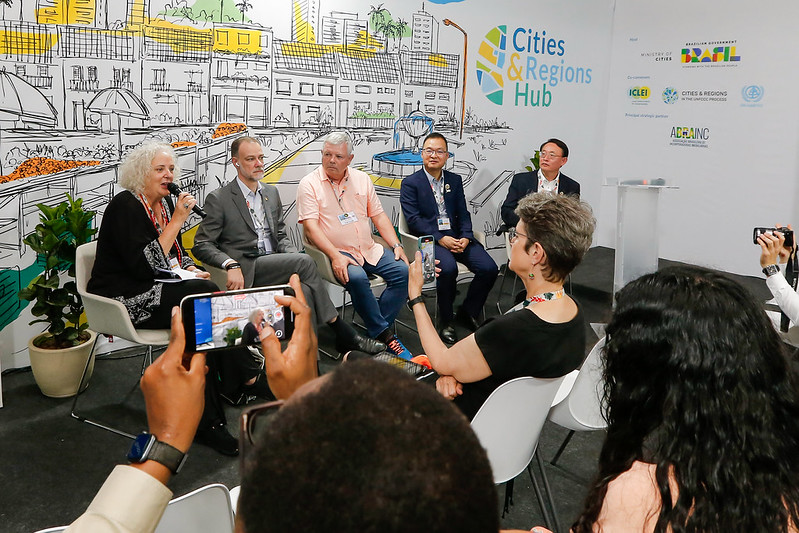
The Cities & Regions Hub was the Home for Multilevel Action & Urbanization at COP30
Building on multiple successful COP pavilions, ICLEI, in its role as the focal point of the LGMA Constituency, and UN-Habitat co-convened the Cities & Regions Hub in the Blue Zone at COP30. The Hub was hosted by the Ministry of Cities of Brazil.
Over its two-week program, the Hub brought together 25 partner organizations, hosted 46 events, and featured more than 200 speakers from national, local, and regional governments, finance institutions, youth, urban practitioners and civil society. Sessions tackled core urban priorities—from housing, infrastructure, and basic services to climate finance, resilience, multilevel governance, and climate justice—showcasing practical pathways for implementation and scaling.
The Hub was part of the first Neighbourhood of the Mutirão for Cities, Water and Infrastructure. This interconnected Neighbourhood of four pavilions placed cities, infrastructure, buildings, cooling, and water at the center of climate discussions. Inspired by the Brazilian tradition of mutirão, a priority of the COP30 Presidency, the Neighbourhood reflected how local action, solidarity, and shared effort can drive systemic transformation for inclusive climate action.
Learn more
Town Hall COPs at COP30
Since launching in early 2025, ICLEI’s Town Hall COP Initiative has gained momentum, with more than 50 Town Hall COPs convened in 40 countries across all continents, gathering more than 12,000 people and even being recognized as an official model for multilevel action in countries such as South Africa, Malaysia, and Kiribati.
At COP30, we brought the lessons from communities across the globe on how Town Hall COPS are ensuring that climate action is locally led, transformation-oriented, and nationally relevant.
Learn more about the Town Hall COPs
Bringing best practices from Daring Cities to COP30
Under the theme “Stronger national climate plans through multilevel action,” Daring Cities 2025, co-convened by ICLEI and the Federal City of Bonn, Germany, gathered local and regional leaders and national policymakers to shape NDCs 3.0 ahead and beyond COP30.
Building on CHAMP and supporting ICLEI’s Town Hall COPs, Daring Cities 2025 showcased how cities and regions can forge bold multilevel partnerships and governance to raise national ambition.
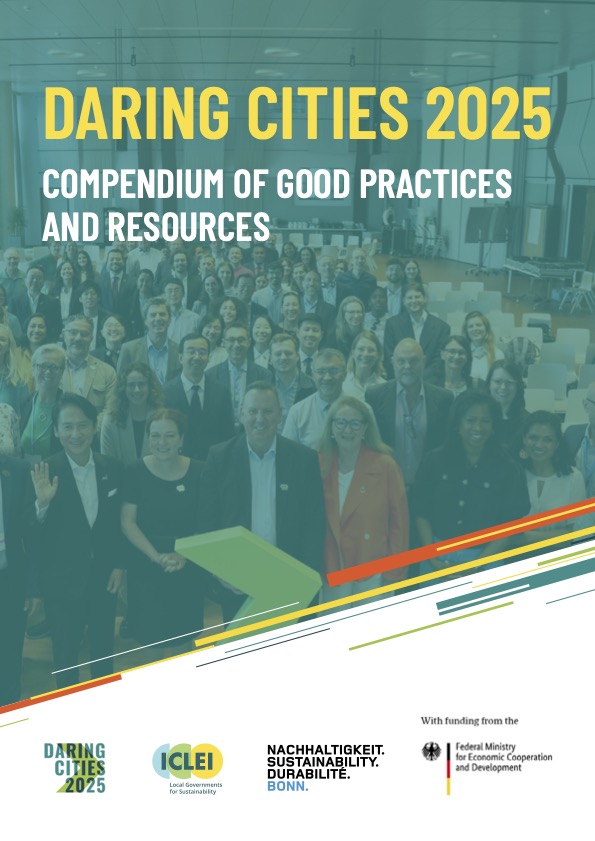
Drawing from the Bonn Dialogues and Virtual Forum, Daring Cities 2025 has developed a compendium of good practices featuring over 30 real-world case studies and ready-to-use resources that connect local solutions to national goals and global impact.
At COP30, we brought Daring Cities’ good practices, especially those stemming from the Town Hall COPs, to a dedicated session on the initiative.
Download the Compendium